ERP Software for Machine Manufacturing Companies: Features, Benefits & How to Choose the Right Solution
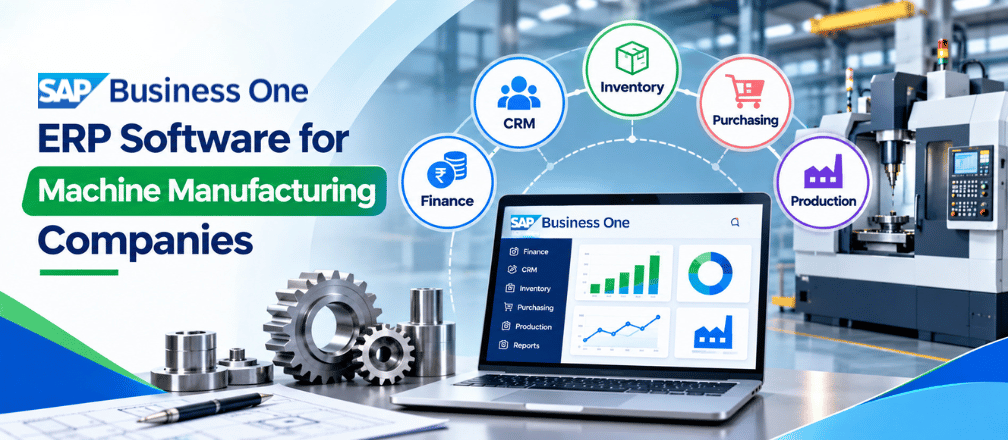
Machine manufacturing companies manage complex operations involving engineering, production planning, raw material procurement, inventory, quality control, machine assembly, costing and customer deliveries. As businesses grow, managing these activities through spreadsheets or disconnected software can lead to production delays, inventory inaccuracies, cost overruns and limited visibility into business performance.
This is where ERP software for machine manufacturing companies becomes essential. An integrated ERP system connects different departments and business processes, helping manufacturers manage their operations from a single platform.
SAP Business One is one ERP solution that can help small and mid-sized machine manufacturing businesses improve operational control, streamline production processes and make informed business decisions.
In this blog, we explore the key features, benefits and important considerations when choosing ERP software for a machine manufacturing company.
What Is ERP Software for Machine Manufacturing Companies?
ERP (Enterprise Resource Planning) software is a business management system that integrates essential operations such as finance, purchasing, inventory, production, sales, customer management and reporting.
For machine manufacturing companies, ERP software helps coordinate activities across the entire manufacturing lifecycle, including:
- Product design and Bill of Materials (BOM) management
- Raw material planning and procurement
- Production planning and scheduling
- Work-in-progress (WIP) tracking
- Machine assembly and component management
- Quality inspections
- Inventory and warehouse management
- Production costing and financial accounting
- Sales orders and customer delivery management
Instead of maintaining separate records across departments, an ERP system provides a connected view of business operations.
Why Do Machine Manufacturing Companies Need ERP Software?
Machine manufacturing often involves multiple components, customised specifications, different production stages and long procurement cycles. Even a small delay in material availability or production planning can affect delivery commitments.
Common challenges faced by machine manufacturers include:
1. Complex production planning
Manufacturers need to coordinate machines, labour, materials and production schedules. Manual planning makes it difficult to identify bottlenecks and manage changing priorities.
2. Difficulty managing raw materials and components
Machine manufacturing requires a wide range of materials, bought-out components, electrical parts, mechanical assemblies and consumables. Without accurate inventory information, companies may face shortages or excess stock.
3. Limited visibility into production costs
Tracking material consumption, labour and other production expenses manually can make it difficult to calculate the actual cost of manufacturing a machine.
4. Delays in procurement
When purchasing teams do not have accurate information about material requirements and stock availability, procurement decisions can be delayed.
5. Inaccurate delivery commitments
Without real-time information about production progress and material availability, sales teams may struggle to provide reliable delivery timelines.
6. Disconnected business information
When finance, inventory, production and sales use separate systems, employees may spend time reconciling data instead of focusing on business operations.
ERP software helps address these challenges by connecting business processes and improving information visibility.
Key Features of ERP Software for Machine Manufacturing Companies
The right ERP solution should support the complete manufacturing process while connecting production activities with finance, purchasing, inventory and sales.
1. Bill of Materials (BOM) Management
A machine may consist of hundreds of components, subassemblies and raw materials. Managing these requirements accurately is essential for production planning and cost estimation.
ERP software helps manufacturers maintain structured Bills of Materials for their products.
Key capabilities include:
- Define raw materials and components required for each machine
- Maintain product and assembly structures
- Track component quantities
- Manage production requirements
- Support material planning based on BOM data
- Update product structures when specifications change
With organised BOM information, manufacturers can improve material planning and reduce errors during production.
2. Production Planning and Control
Production planning is one of the most important functions in machine manufacturing. Companies need to coordinate material availability, production orders, work centres and delivery schedules.
ERP software can help manage:
- Production orders
- Planned and released production activities
- Material requirements
- Production schedules
- Component consumption
- Finished goods reporting
- Work-in-progress visibility
SAP Business One supports production management through production orders and related planning and inventory processes. The exact production workflow depends on the company’s manufacturing model and configuration.
3. Material Requirements Planning (MRP)
Material Requirements Planning helps manufacturers determine what materials are needed, in what quantities and when they should be available.
An ERP-based MRP process can consider factors such as:
- Existing inventory levels
- Open purchase orders
- Sales orders
- Production requirements
- Bill of Materials
- Minimum stock levels
- Planned lead times
This helps purchasing and production teams identify material requirements earlier and plan procurement more effectively.
4. Inventory and Warehouse Management
Machine manufacturing companies need to manage raw materials, components, semi-finished goods, finished machines, spare parts and consumables.
ERP inventory management provides better visibility into stock movement and availability.
Important features include:
- Real-time stock visibility
- Multiple warehouse management
- Goods receipt and goods issue
- Inventory transfers
- Batch and serial number tracking, where applicable
- Stock valuation
- Reorder level monitoring
- Inventory movement reports
Accurate inventory information helps reduce unnecessary purchases, avoid material shortages and improve warehouse control.
5. Purchasing and Vendor Management
Machine manufacturers frequently purchase raw materials, motors, bearings, electrical components, fabricated parts and other production inputs from multiple suppliers.
ERP purchasing functionality helps businesses manage the procurement cycle.
Key features include:
- Purchase requests and purchase orders
- Supplier information management
- Purchase quotations
- Goods receipt processing
- Supplier invoice tracking
- Purchase price comparison
- Outstanding purchase order reports
- Supplier payment visibility
By connecting purchasing with inventory and production planning, manufacturers can make procurement decisions based on actual business requirements.
6. Quality Management
Quality is critical in machine manufacturing because component defects or assembly issues can affect machine performance, reliability and customer satisfaction.
ERP software can support quality-related processes through configured inspection workflows, quality records and reporting.
Depending on the ERP solution and additional applications used, manufacturers may manage:
- Incoming material inspections
- In-process quality checks
- Finished machine inspections
- Rejection and rework records
- Supplier quality information
- Inspection documentation
- Non-conformance tracking
Companies should evaluate their specific quality requirements when selecting an ERP solution, particularly if they need advanced inspection plans, compliance documentation or specialised quality management capabilities.
7. Production Costing and Financial Management
Understanding the cost of manufacturing each machine is important for pricing, profitability and business planning.
ERP software connects financial information with purchasing, inventory and production transactions.
Manufacturers can gain better visibility into:
- Raw material costs
- Component costs
- Purchase expenses
- Inventory valuation
- Production-related costs
- Sales revenue
- Customer receivables
- Supplier payables
- Profitability reports
Accurate cost tracking helps management evaluate product margins and identify areas where expenses can be controlled.
8. Sales and Customer Relationship Management (CRM)
Machine manufacturers often deal with enquiries, quotations, technical discussions, order confirmations and customised customer requirements.
ERP-integrated sales and CRM functionality helps teams manage the customer journey.
Features may include:
- Lead and opportunity management
- Customer information
- Sales quotations
- Sales orders
- Customer communication history
- Delivery tracking
- Sales analysis
- Customer payment status
When sales information is connected with inventory and production, teams can make more informed decisions about order commitments.
9. Service Management and After-Sales Support
Machine manufacturers may need to provide installation support, maintenance, warranty services and spare parts after delivery.
ERP software with suitable service management capabilities can help organise these activities.
Businesses may manage:
- Customer equipment information
- Service calls
- Warranty details
- Service contracts
- Maintenance history
- Spare parts requirements
- Service activities and follow-ups
This helps manufacturers maintain customer service records and improve after-sales coordination.
10. Reporting and Business Intelligence
Management needs accurate information to monitor production performance, financial results, inventory levels and sales activities.
ERP reporting helps bring operational and financial data together.
Useful reports and dashboards may include:
- Production order status
- Material availability
- Inventory ageing
- Purchase order status
- Production costs
- Sales performance
- Outstanding receivables
- Supplier payments
- Profit and loss
- Cash flow
With timely business information, management can identify operational issues and make better decisions.
Benefits of ERP Software for Machine Manufacturing Companies
Implementing ERP software can improve coordination across manufacturing and business operations.
1. Improved Production Efficiency
ERP connects production orders, material requirements and inventory information. This helps production teams plan activities more effectively and identify material-related delays.
2. Better Inventory Control
Manufacturers can track raw materials, components, work in progress and finished goods through integrated inventory records. This supports better stock planning and reduces the risk of excess or insufficient inventory.
3. Reduced Manual Work
Instead of maintaining duplicate records across spreadsheets and disconnected applications, employees can work with shared business information.
This can reduce repetitive data entry and improve consistency between departments.
4. Improved Material Planning
MRP and inventory information help purchasing teams understand upcoming requirements and plan procurement around production needs.
5. Better Cost Visibility
Connecting purchasing, inventory, production and finance gives management a clearer picture of business expenses and product profitability.
6. Improved Customer Delivery Management
Sales and production teams can access relevant order and operational information to coordinate delivery commitments more effectively.
7. Centralised Business Information
ERP software creates a common source of business data across departments, making it easier for management to monitor operations.
8. Support for Business Growth
As machine manufacturing companies expand their product range, workforce, warehouses or customer base, an integrated ERP system can help standardise business processes and support growth.
Why Choose SAP Business One for Machine Manufacturing?
SAP Business One is an integrated ERP solution designed for small and mid-sized businesses. It brings together core business functions such as financial management, sales, purchasing, inventory, production and reporting.
For machine manufacturing companies, SAP Business One can help connect important operational activities.
Financial Management: Manage accounting, cash flow, receivables, payables and financial reporting.
Inventory Management: Track raw materials, components, finished goods and stock movements across warehouses.
Production Management: Create and manage production orders, maintain BOMs and record component issues and finished product receipts.
MRP: Plan material requirements based on demand, inventory and production-related information.
Purchasing: Manage supplier details, purchase orders, goods receipts and supplier invoices.
Sales Management: Track customer enquiries, quotations, orders and sales activities.
Reporting and Analytics: Access operational and financial reports to monitor business performance.
The solution can be configured to suit different manufacturing processes. Companies with advanced requirements—such as detailed shop-floor data collection, machine maintenance, complex scheduling, specialised quality workflows or product lifecycle management—may need additional applications, integrations or customisation.
How to Choose the Right ERP Software for Your Machine Manufacturing Business
Selecting an ERP solution requires more than comparing software features. Manufacturers should evaluate how well the system supports their actual business processes.
Consider these important factors before making a decision:
1. Understand your manufacturing process
Identify whether your business follows make-to-stock, make-to-order, engineer-to-order, assemble-to-order or a combination of manufacturing methods.
2. Evaluate BOM and production requirements
Check whether the ERP supports your product structures, production orders, component consumption and reporting requirements.
3. Check inventory and warehouse capabilities
Ensure the system can manage raw materials, components, work in progress, finished goods and multiple warehouses as required.
4. Review MRP functionality
Evaluate how the ERP calculates material requirements and supports purchasing and production planning.
5. Assess costing and financial reporting
Check whether the system can provide the financial and operational information needed to understand manufacturing costs and profitability.
6. Consider integrations and customisation
Identify whether you need integration with CAD, PLM, machine monitoring, e-commerce, barcode systems, payroll or other business applications.
7. Evaluate implementation partner experience
The implementation partner should understand manufacturing workflows, ERP configuration, data migration, employee training and post-implementation support.
8. Calculate the total cost of ownership
Consider software licensing, implementation, customisation, infrastructure or cloud hosting, training, support and future upgrades.
Is SAP Business One Suitable for Small and Mid-Sized Machine Manufacturers?
SAP Business One can be a suitable ERP option for small and mid-sized machine manufacturing companies that want to integrate finance, purchasing, inventory, sales and core production processes.
It may be particularly relevant for businesses that:
- Want to replace disconnected accounting and inventory systems
- Need structured BOM and production order management
- Want better visibility into raw material availability
- Need to connect purchasing with production requirements
- Want improved financial and operational reporting
- Plan to expand their manufacturing operations
However, suitability depends on production complexity, industry-specific requirements, existing systems and the level of operational control required. A process assessment and product demonstration can help determine whether SAP Business One meets your business needs.
Why Work with Cogniscient Business Solutions for SAP Business One Implementation?
Choosing the right ERP software is only one part of a successful digital transformation. The implementation approach is equally important.
Cogniscient Business Solutions (CBS) helps businesses evaluate and implement SAP Business One based on their operational requirements.
For machine manufacturing companies, the implementation process can focus on understanding and configuring relevant business workflows, including:
- Financial management and accounting
- Inventory and warehouse management
- Purchasing and vendor management
- Bill of Materials and production orders
- Material requirements planning
- Sales and customer management
- Business reporting and analytics
The objective is to connect key business functions through an integrated ERP platform and improve visibility across operations.
Before recommending a solution, it is important to understand your manufacturing process, product structures, procurement cycle, inventory requirements and reporting expectations.
Conclusion
Machine manufacturing companies need effective coordination between engineering, procurement, inventory, production, finance and sales. Managing these activities through disconnected systems can create operational challenges and limit business visibility.
ERP software helps manufacturers integrate their processes, improve material planning, monitor production activities and gain better control over costs.
SAP Business One offers an integrated platform for small and mid-sized manufacturers looking to streamline their business operations. With the right implementation approach, it can help build a more connected and organised manufacturing environment.